
by John Calzaretta, Founder and CEO of Sentry Enterprises
For years, the financial services industry has been moving toward experiences that are faster, more digital, and increasingly invisible.
Consumers open accounts from their phones. Payments happen with a tap. Customer service is moving into apps. Digital wallets continue to change the way people think about what they need to carry.
Yet something interesting has happened at the same time. The physical payment card has become more important as a symbol of the relationship between the customer and the financial institution behind it.
And few products demonstrate that better than the metal card.
There is something immediately different about holding a metal card. The weight is noticeable. The feel is distinctive. Even the sound it makes when placed on a counter or table communicates something before the transaction begins.
For financial institutions competing for premium customers, stronger brand recognition, and top-of-wallet preference, metal offers something increasingly rare in a digital world: a physical experience customers can actually feel.
Why Weight Changes Perception
Consumers judge products long before they consciously evaluate features, subconsciously evaluating packaging, design, feel, or even weight.
Luxury brands have understood this for decades. A watch, automobile, piece of jewelry, or technology product does not communicate quality through functionality alone. Materials, construction, and the physical experience reinforce the product’s value.
Payment cards are no different. A traditional card can communicate a brand visually. A metal card adds another dimension. Customers don’t just see the difference. They feel it. That distinction matters most when financial institutions try to create differentiated experiences for premium customers.
If an institution has invested in exclusive benefits, personalized service, elevated rewards, and specialized products, the physical card should reinforce that positioning. Metal creates that opportunity. The card becomes a tangible reminder that this relationship is different.
The Card as Part of the Customer Experience
For years, the payment card was treated largely as a delivery mechanism for an account: open the account, issue the card, activate it, use it. But the competitive environment has changed.
Financial institutions are increasingly focused on the entire customer experience, from acquisition and onboarding through engagement, loyalty, and retention. Every interaction contributes to how a customer perceives the relationship.
The physical card is one of the few branded objects customers carry every day, making it valuable real estate.
A thoughtfully designed metal card can become part of the reason a customer is excited to open an account. It can reinforce premium positioning after the account is opened. And every time the customer reaches for it, the card creates another small interaction with the brand.
The card is no longer simply what arrives after the customer relationship begins; when done well, it can become part of the reason that relationship starts in the first place.
Premium Doesn’t Have to Mean Complicated
Historically, delivering a differentiated metal card experience could add manufacturing complexity. That has created a challenge for issuers and card manufacturers. They may want to offer a more distinctive product without completely changing the infrastructure and processes already supporting their card programs.
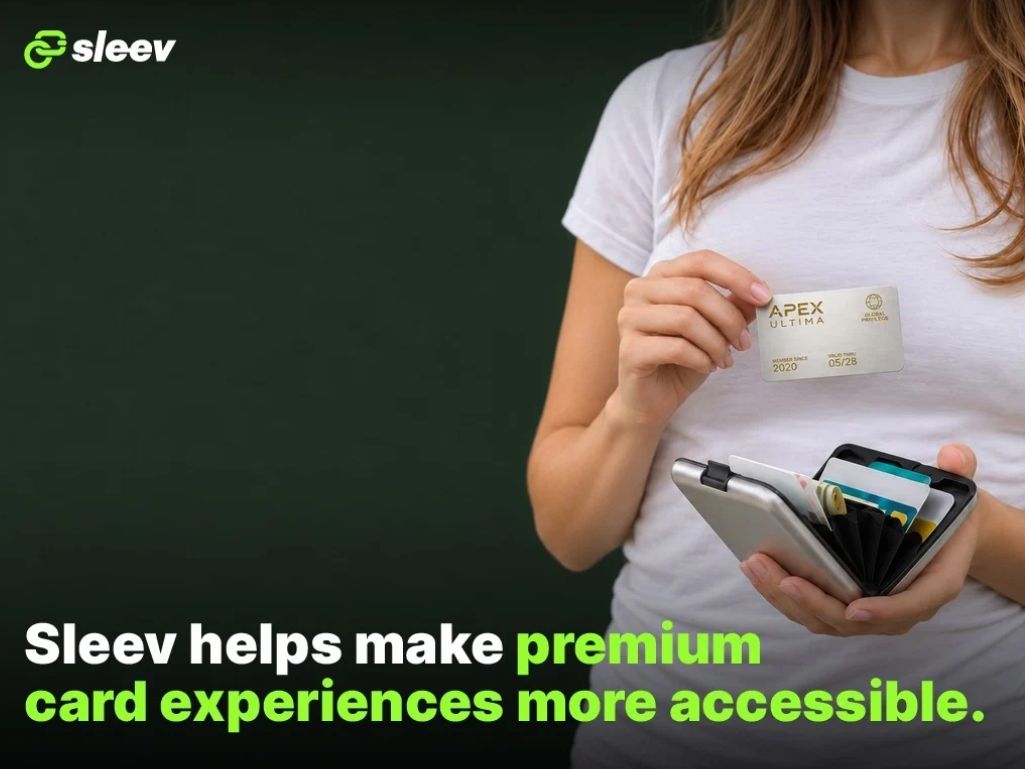
The next generation of metal card technology is beginning to change that equation. Sleev’s prelaminated metal platform integrates with existing production processes, allowing organizations to introduce metal without the specialized machinery or significant workflow disruption traditionally associated with metal programs.
That changes the conversation. Instead of asking whether the infrastructure can support a premium card experience, issuers and manufacturers can focus on the experience they want to create.
Metal becomes less of a manufacturing exception and more of an accessible option within a broader card strategy.
Not All Metal Experiences Are the Same
Just as premium customers are not all the same, metal card programs do not need to follow a single formula. Different brands have different goals.
Some may want the weight and authority of an encapsulated metal card while maintaining compatibility with their current production environment. Others may want the benefits of metal combined with tokenization, allowing cards to be distributed without payment credentials and securely activated by the customer after delivery. Still others may want the visual impact of an edge-to-edge design, where the exposed metal edge itself becomes part of the card’s identity.
This flexibility gives financial institutions an opportunity to think about metal as more than a material choice. It becomes part of the overall product strategy.
The question shifts from, “Should we offer a metal card?” to, “What should our metal card experience accomplish?”
Where Physical Experience Meets Digital Innovation
The most interesting evolution in metal cards may not be happening in the metal itself. It is happening in what the card can do. Modern card programs increasingly connect physical products with digital activation, tokenized credentials, mobile experiences, loyalty programs, and other forms of ongoing engagement.
With Sleev’s tokenizable metal platform, for example, cards can be distributed without payment credentials and activated after delivery via an NFC tap in a mobile app. Payment tokens are then provisioned to connect the card securely to the user.
That means the physical experience does not have to compete with the industry’s move toward digital payments and security. The two can work together. The customer gets the weight, presence, and tactile experience of metal while the institution gains a more flexible approach to distribution and activation.
In that model, metal is no longer simply a premium version of the traditional payment card, it becomes the physical layer of a much more modern payment experience.
Making the Physical Matter More
The future of payments will undoubtedly become more digital but that does not mean physical experiences will become irrelevant.
It may mean exactly the opposite.
As more interactions move behind screens, the physical products that remain have an even greater opportunity to create an impression. A metal payment card does something a digital interface cannot. It gives the customer a tangible representation of the brand, the account, and the relationship they have chosen.
The weight and the finish communicate something, and the experience of carrying and using it communicates something.
For financial institutions, the opportunity is not simply to make a heavier card. It is to make the physical card work harder as part of the overall customer experience from acquisition and activation to engagement and loyalty.
Because in an increasingly digital world, sometimes the most powerful way to make a brand feel different is to give customers something they can actually feel.