
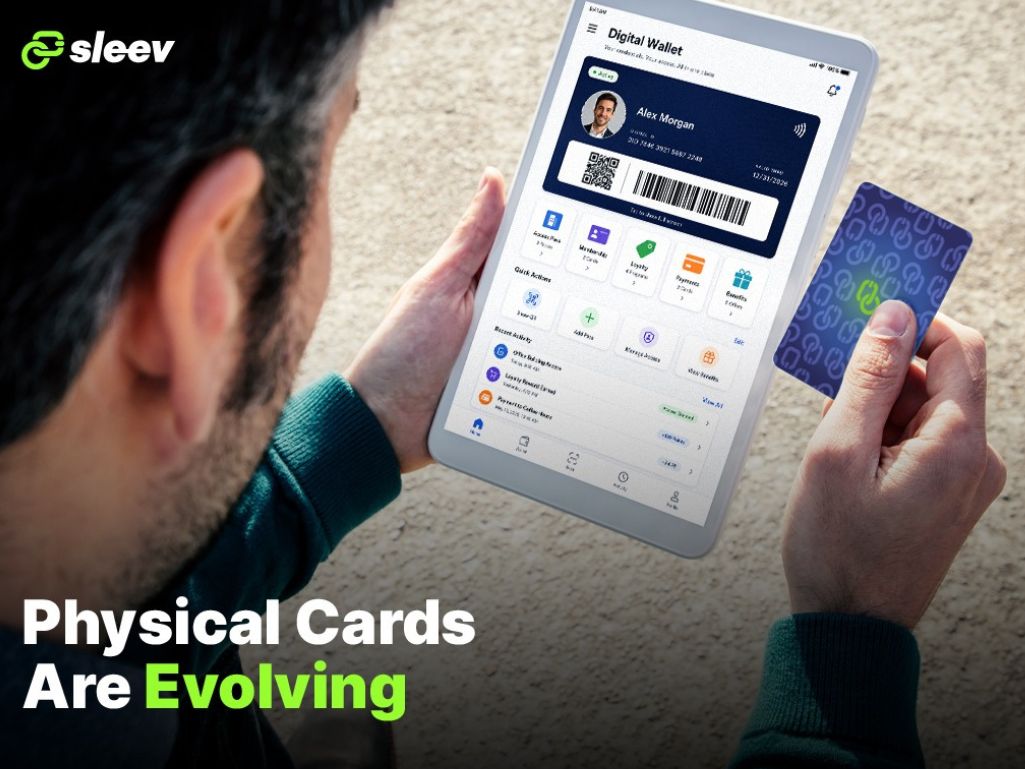
by John Calzaretta, Founder and CEO of Sentry Enterprises
For years, industry experts have predicted the demise of the physical card.
The logic seemed sound. As digital wallets gained adoption, mobile payments became mainstream, and tokenization transformed the way consumers interact with financial and digital services, many assumed physical cards would eventually become obsolete. when a smartphone can do the job?
Yet something unexpected happened.
The more digital our world became, the more valuable physical experiences became. Rather than disappearing, physical cards evolved. In fact, tokenization, the very technology many believed would replace cards, may be the innovation that ultimately makes them more relevant than ever.
This is the tokenization paradox.
Far from eliminating physical cards, tokenization is transforming them from simple payment instruments into connected experiences, digital credentials, and powerful brand engagement tools.
The Original Promise of Tokenization
When tokenization first emerged in the payments industry, its primary purpose was security.
Instead of transmitting sensitive account information during a transaction, tokenization replaces that data with a unique digital token. The actual account details remain protected while the token serves as a secure stand-in for payment processing.
The benefits were clear. Enhanced security. Reduced fraud risk. Improved consumer confidence.
As digital wallets and contactless payments expanded, many viewed tokenization as another step toward a completely digital future. The assumption was that physical cards would gradually become unnecessary as credentials moved entirely into smartphones and connected devices.
But that prediction overlooked something fundamental about human behavior.
People don’t just interact with technology digitally. They interact with it physically.
Physical Still Matters
The most successful brands in the world understand the emotional power of physical objects.
Luxury retailers invest heavily in packaging. Sports fans collect memorabilia. Concertgoers save tickets. Consumers purchase premium products not simply for utility, but because physical experiences create emotional connections that digital interactions alone often cannot.
Physical objects provide something digital experiences struggle to replicate: presence.
They can be displayed, shared, collected, gifted, and remembered. They create moments and memories in ways that purely digital assets often cannot.
This is particularly important in an era where brands are increasingly competing for attention and engagement. Digital experiences may be convenient, but they are also crowded. Consumers are bombarded by apps, notifications, emails, and content every day.
A physical object cuts through that noise.
Tokenization Changes the Role of the Card
What tokenization actually does is remove the limitations that traditionally constrained physical cards.
Historically, cards served a single purpose. A payment card facilitates transactions. A membership card provided access. A loyalty card tracked rewards. A gift card is a stored-value card.
Tokenization changes that equation.
A tokenized card can serve as a secure credential within a dynamic digital ecosystem. The physical card becomes a gateway rather than simply a tool.
Ownership can be authenticated. Access can be granted. Experiences can be unlocked. Rewards can be personalized. Content can be delivered. Communities can be activated.
In other words, the card becomes more powerful when connected.
The physical and digital worlds no longer operate separately. They work together.
From Transaction Tool to Engagement Platform
This shift is creating opportunities far beyond traditional payments.
Sports teams are exploring ways to connect fan identity to exclusive experiences. Entertainment brands are seeking new methods for rewarding loyal audiences. Membership organizations are looking for more engaging ways to connect with their communities. Financial institutions are searching for differentiated products that stand out in a crowded marketplace.
In each of these cases, tokenization enables the physical card to become more than a payment mechanism.
It becomes a platform for engagement.
A premium card can serve as a collectible. It can unlock access to events. It can verify membership status. It can connect users to exclusive digital content. It can provide ongoing benefits that evolve over time.
Rather than becoming less important, the physical card becomes a highly visible and tangible extension of a brand relationship.
Why Consumers Still Want Something Physical
Perhaps the biggest flaw in the prediction that physical cards would disappear is that it assumed consumers make decisions based solely on efficiency.
They don’t.
Consumers routinely choose products and experiences that deliver emotional value, even when more efficient alternatives exist.
Vinyl records continue to thrive despite streaming services. Printed books remain popular despite e-readers. Luxury watches continue to sell despite smartphones displaying the time more accurately.
Physical objects matter because they create connection, identity, and meaning.
The same principle applies to cards.
A beautifully designed card communicates status, membership, affiliation, achievement, or a sense of belonging. It creates an experience that a digital credential stored inside a smartphone often cannot.
Tokenization doesn’t eliminate that value. It amplifies it.
The Future Is Physical and Digital
The conversation should no longer be framed as physical versus digital.
The future belongs to products that seamlessly combine both.
Tokenization enables physical cards to become smarter, more secure, and more dynamic. It allows brands to create products that maintain the emotional appeal of physical ownership while delivering the flexibility and functionality of digital experiences.
This is why the death of the physical card was greatly exaggerated.
The card isn’t disappearing. It’s evolving.
What was once a static piece of plastic or metal is becoming a connected platform for identity, access, engagement, loyalty, and commerce.
The most successful organizations will recognize that tokenization is not a replacement for physical products. It is a force multiplier.
In a world increasingly dominated by digital experiences, the most powerful products may be those that give consumers the best of both worlds: something they can hold in their hands and something that connects them to an ever-expanding digital ecosystem.
That’s not the end of the physical card. It’s the beginning of its next chapter.