
by John Calzaretta, Founder and CEO of Sentry Enterprises
For decades, payment cards have followed a remarkably consistent formula.
Brands have experimented with colors, materials, finishes, embossing, and even metal construction, but the fundamental experience has remained largely unchanged. A card sits quietly in a wallet until it is needed. The transaction occurs. The card disappears back into a pocket or purse.
In a world increasingly defined by dynamic digital experiences, however, static products face a growing challenge: they struggle to capture attention.
Consumers interact daily with personalized content, interactive applications, streaming media, and highly visual digital environments. Nearly every touchpoint in modern life has become more engaging, responsive, and immersive. Yet one of the most frequently used branded products in a consumer’s life, the payment card, has remained largely unchanged.
That is beginning to shift.
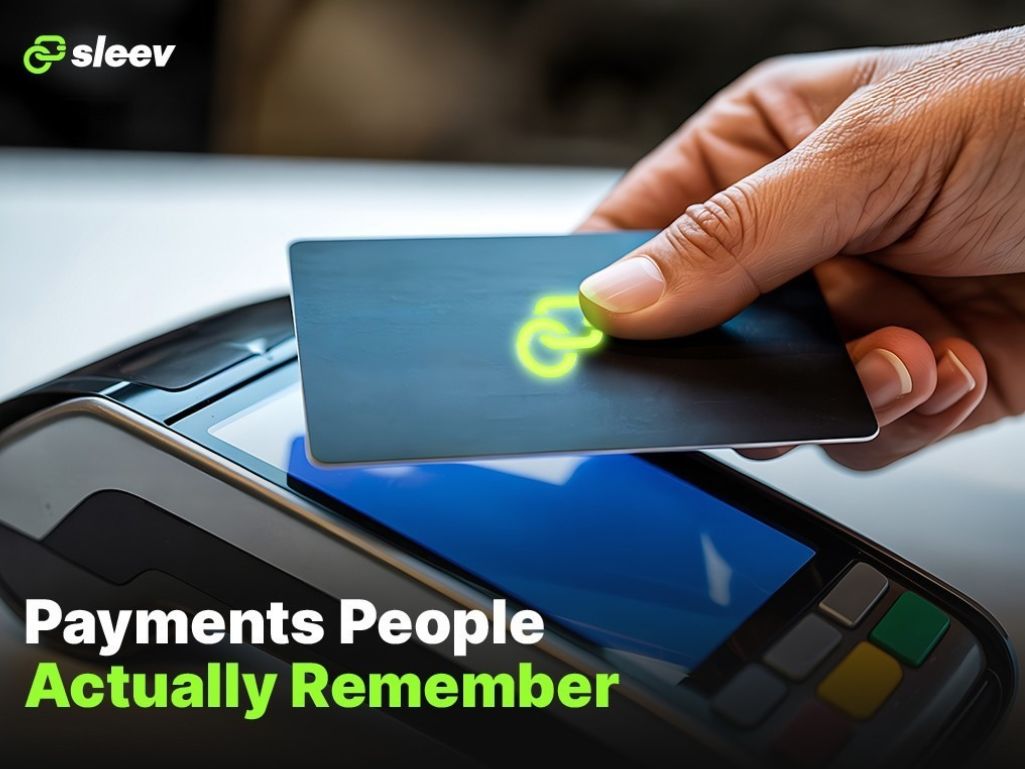
Advances in embedded electronics and display technologies are creating opportunities to transform the card from a passive payment instrument into an active brand experience. Among the most intriguing developments is the emergence of OLED-enabled cards that introduce motion, animation, and visual storytelling directly into the payment experience.
At first glance, animated displays on a payment card may seem like a novelty. In reality, they represent something much more significant. They fundamentally change how people interact with a product, how they perceive a brand, and how they remember an experience.
Why Motion Commands Attention
Human beings are naturally drawn to movement.
Long before the digital age, our brains evolved to notice motion because it often signaled something important. That instinct remains deeply embedded in human behavior today. It is why animated content consistently attracts more attention than static images. This is why digital signage outperforms traditional displays. It is why video dominates social media engagement.
Motion breaks through clutter.
In environments saturated with visual information, movement immediately captures focus and creates a moment of attention that static objects often cannot achieve.
When applied to a payment card, this principle becomes surprisingly powerful. A card that illuminates, animates, or displays dynamic content transforms a routine transaction into a memorable interaction. Instead of simply completing a payment, the cardholder experiences a brief but meaningful moment of engagement.
While the transaction itself may only last a few seconds, the emotional impact can be far more lasting.
The Psychology of Memorable Experiences
Consumers rarely remember transactions.
They remember experiences.
This distinction matters because the strongest brands are built not merely on functionality, but on emotional connection. People form lasting impressions based on how a product makes them feel, not simply what it does.
Traditional payment cards are designed primarily around utility. Their purpose is to facilitate secure transactions as efficiently as possible. While that functionality remains essential, it does little to differentiate one brand from another.
An OLED-enabled card introduces an entirely different dimension to the experience. Motion creates surprise. Surprise creates attention. Attention creates memory.
That sequence is important because memorable experiences contribute directly to customer satisfaction and brand affinity. A product that consistently delivers small moments of delight can strengthen the overall perception of the brand behind it.
For financial institutions, premium brands, sports organizations, entertainment properties, and membership programs, those moments represent valuable opportunities to reinforce their relationship with customers.
Beyond Payments: Turning the Card Into a Brand Touchpoint
One of the most overlooked realities of the payment industry is that cards are among the most frequently used branded products consumers own.
A mobile app may be opened periodically. An email may be ignored. An advertisement may never be seen. But a payment card is often used multiple times each week, sometimes multiple times each day.
That frequency creates enormous branding potential.
Historically, organizations have attempted to capitalize on this opportunity through logos, premium materials, and card design. OLED technology expands those possibilities significantly by allowing brands to introduce motion, storytelling, and dynamic content directly onto the card itself.
Imagine a sports team commemorating a championship season through animated visuals that activate during use. Consider a luxury brand reinforcing its premium positioning through elegant motion graphics. Think about a financial institution welcoming new clients, celebrating milestones, or creating differentiated experiences for premium account holders.
The card evolves from a payment mechanism into a living extension of the brand.
The Impact on Cardholder Satisfaction
Customer satisfaction is often influenced by factors that seem surprisingly small.
People appreciate products that feel unique. They value experiences that stand out. They respond positively to thoughtful details that demonstrate innovation and attention to design.
OLED-enabled cards create precisely this type of differentiation.
The technology introduces an element of personalization and exclusivity that traditional cards cannot replicate. Cardholders feel they possess something distinctive, something that reflects both innovation and status.
This is particularly relevant in premium banking, luxury retail, sports and entertainment, and membership-driven programs where differentiation is central to the customer experience. When customers perceive a product as special, they are more likely to engage with it, talk about it, and develop stronger emotional connections to the brand behind it.
That emotional connection often translates into higher satisfaction and stronger long-term loyalty.
Why Retention Is an Experience Problem
Organizations frequently focus on retention through rewards, pricing, and benefits. While these factors remain important, they are only part of the equation.
Retention is also influenced by how customers feel about a brand.
Products that generate emotional engagement create stronger relationships than those that deliver only functional value. The more memorable and distinctive the experience, the harder it becomes for competitors to replicate.
OLED-enabled cards help create that differentiation by transforming an ordinary interaction into something consumers notice and remember. They provide organizations with a unique opportunity to create recurring moments of engagement through a product that customers already use regularly.
Over time, those moments accumulate. They strengthen familiarity, reinforce brand perception, and contribute to a deeper sense of connection.
The Future of Card Design Is Dynamic
For years, innovation in card design focused on materials, durability, and manufacturing techniques. While those advancements remain important, the next frontier is experience.
Consumers increasingly expect products to be interactive, personalized, and engaging. Static design alone is no longer enough to create lasting differentiation.
OLED technology represents a significant step toward a new category of connected, dynamic payment experiences. It introduces movement where there was once only imagery. It creates interaction where there was once only utility. Most importantly, it transforms the card from a passive object into an active participant in the customer experience.
The result is more than a payment card.
It is a brand touchpoint, a conversation starter, a loyalty builder, and a platform for engagement.
In a marketplace where attention is scarce and customer loyalty is increasingly difficult to earn, that kind of differentiation matters.
Because sometimes the smallest motion can create the biggest impact.